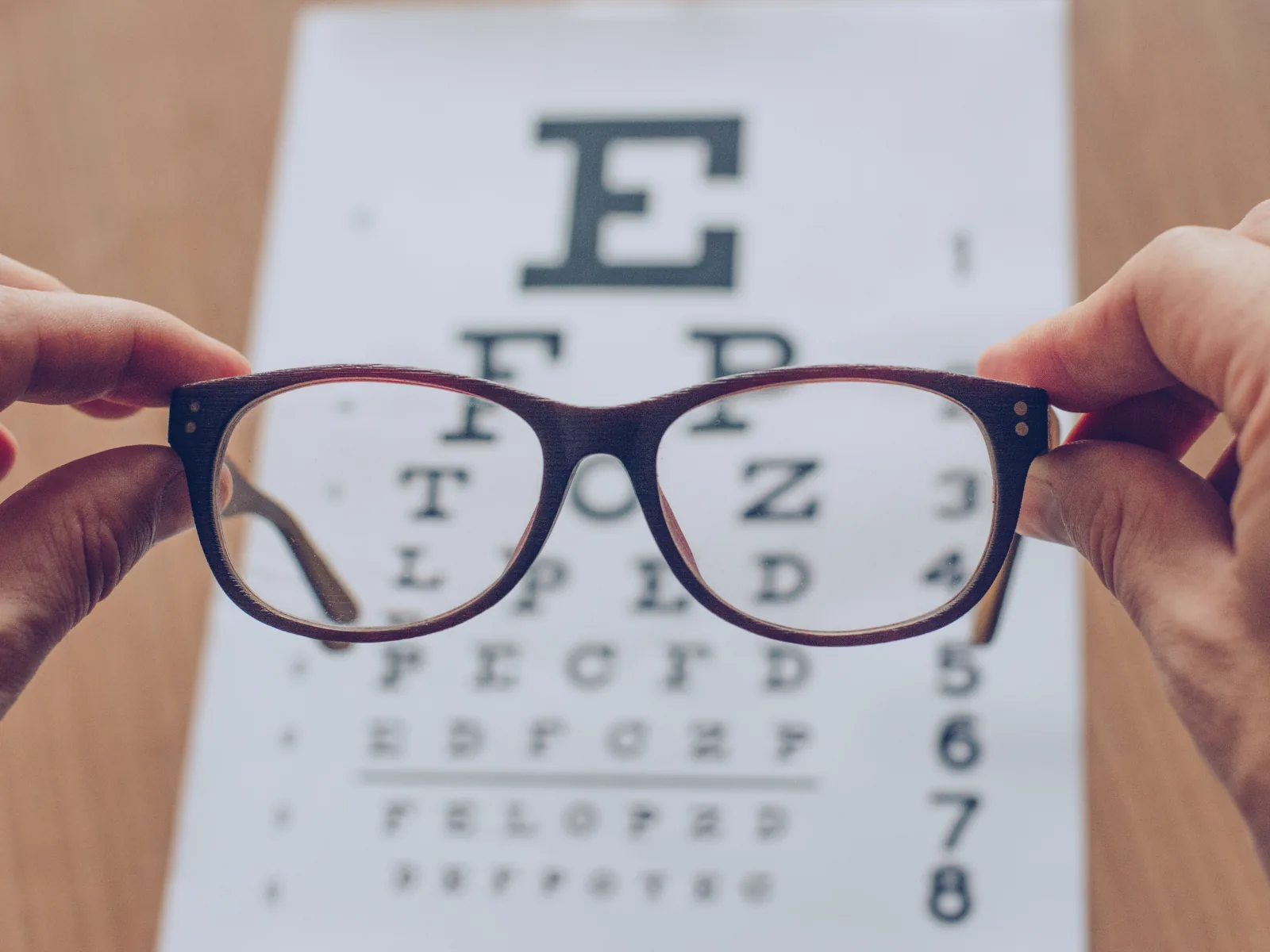
Myopia causes blurred distance vision. Laser surgery reshapes the cornea so that the image once again forms on the retina, reducing or eliminating dependence on glasses and contact lenses. The indication is always decided after a complete pre-operative assessment.
Myopia is a very common visual disorder that makes distant objects appear blurred, while near vision remains clear. It results from an eye that is slightly too long, or a cornea that is too curved: light rays converge in front of the retina rather than forming precisely on it. The perceived image is therefore blurred for anything at a distance.
Myopia most often appears during childhood or adolescence and tends to stabilise in adulthood. It is once this stability has been reached that refractive surgery can be considered, in order to durably correct the optical defect.
Myopia is not a disease, but an optical defect. High myopia does, however, require regular retinal monitoring, independent of any question of correction.
Why do we become myopic?
Myopia results from a combination of hereditary and environmental factors. Family background plays an important role: a child whose both parents are myopic is at greater risk of developing it. Added to this is the influence of lifestyle: prolonged close work (screens, reading) and limited exposure to natural light are now considered contributory factors in the progression of myopia in children.
Genetic factors: family history of myopia.
Elongation of the eyeball: the most common optical cause.
Environmental factors: intensive close work, limited time spent outdoors.
Which signs should prompt attention?
The main sign is blurred distance vision: difficulty reading signs, recognising a face at a distance, seeing clearly whilst driving or at the cinema. Other signs often accompany this blurring:
need to squint to see clearly in the distance;
visual fatigue, headaches at the end of the day;
difficulty driving at night;
in children: moving closer to screens, difficulty reading the board in class.
In the presence of these signs, an ophthalmological assessment allows the defect to be measured precisely and any other cause to be excluded.
Schematic, non-anatomical illustration of the optical principle of myopia and its correction.
What does laser myopia surgery involve?
Refractive laser surgery corrects myopia by reshaping the cornea (the transparent surface at the front of the eye, which can be compared to the lens of a camera) with great precision. By slightly modifying its curvature, the laser shifts the convergence point of light rays so that it lies once again on the retina. Distance vision is thus corrected, most often within the first few days following the procedure.
The procedure is swift, performed under local anaesthesia with eye drops, and takes a few minutes per eye. It does not remove the need for routine ophthalmological follow-up, particularly in the case of high myopia.
Which laser techniques are available?
Two laser techniques can correct myopia. The choice is made on a case-by-case basis, after the assessment, depending on the thickness and shape of your cornea, the degree of myopia, and your lifestyle.
Lasik
A thin flap is created in the cornea, the laser then reshapes the underlying tissue, and the flap is repositioned. Visual recovery is generally rapid and discomfort is limited.
PRK, surface laser
The laser acts directly on the surface of the cornea, without creating a flap. This is a preferred option for certain thinner corneas. Recovery is somewhat more gradual.
No technique is "better" in absolute terms: the right technique is the one that suits your eye, determined by the pre-operative assessment.
Am I eligible for the procedure?
Eligibility can only be confirmed after a complete assessment. However, several conditions are generally required:
stable myopia for at least one year;
being an adult;
a cornea of compatible thickness and shape;
the absence of certain eye conditions (severe dry eye, uncontrolled corneal or retinal pathology);
current pregnancy is a temporary contraindication.
The pre-operative assessment, which is painless, makes it possible to verify all of these criteria and to determine whether the indication is appropriate.
How is care managed with Dr Gattoussi?
The approach is gradual and without commitment: the objective of the first consultation is to assess your situation and inform you, not to decide on your behalf.
1
Refractive assessment and corneal mapping
Precise measurements, corneal imaging and a complete examination of the eye.
2
Information and shared decision
Explanation of the options, expected benefits and limitations, and answers to your questions.
3
Procedure, if indicated
Laser treatment of a few minutes per eye, under local anaesthesia with eye drops.
4
Post-operative follow-up
Closely scheduled check-ups to monitor healing and recovery.
This approach draws on Dr Gattoussi's expertise in ocular imaging, which enables a particularly precise pre-operative evaluation.
What is the recovery like?
Recovery depends on the technique used. In general, some discomfort, a gritty sensation or watering may be experienced in the hours that follow. Fluctuating vision in the first few days is normal.
Regular follow-up is essential to ensure proper healing of the cornea and the quality of the visual outcome. Appointments are generally scheduled as follows:
The next day (D1): check of healing and vision;
At 1 week: review of progress and any adjustment of treatment;
At 1 month: assessment of visual stability and of the ocular surface.
Eye drops are prescribed for a few weeks. You are also advised not to rub your eyes and to follow the instructions given by your surgeon, in order to support optimal healing.
Where does the procedure take place?
The consultation and assessment take place at Dr Gattoussi's practice, at the Med-Ophta centre, 95 rue du Faubourg Saint-Antoine, 75011 Paris. The laser procedure takes place at a dedicated surgical centre.
Frequently asked questions about myopia surgery
Is laser myopia surgery painful?
The procedure is performed under local anaesthesia with eye drops and is not painful. Transient discomfort may be experienced in the hours that follow, during the healing process.
Is the correction permanent?
The laser durably corrects the existing defect. However, the eye continues to age: presbyopia, which is age-related, may appear later and affects near vision.
Is the procedure covered by insurance?
Refractive surgery is generally not covered by the French national health insurance. Some supplementary health plans offer a fixed contribution. Details are clarified at the consultation.
Can both eyes be treated on the same day?
This depends on the technique and your individual situation. This point is discussed during the pre-operative assessment.
When can I return to work and sport?
The timescale depends on the technique and your activity. Precise instructions are provided after the procedure.