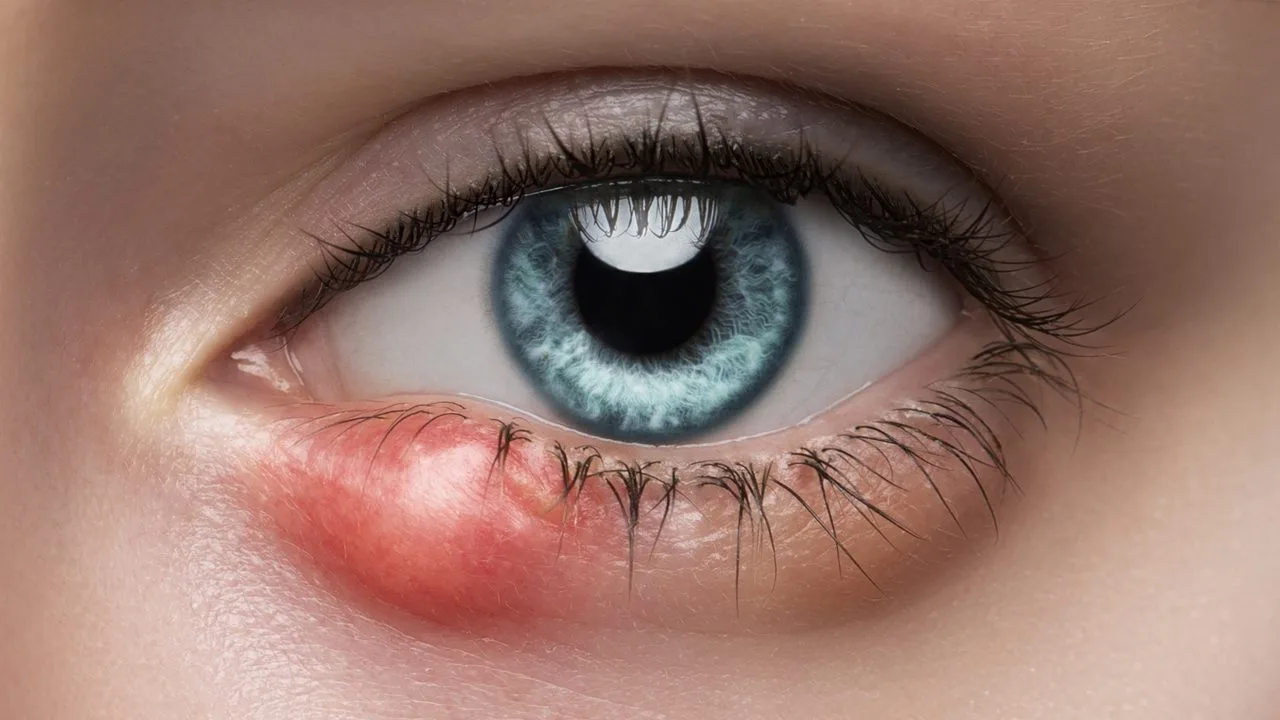
A small red, tender lump, or a firmer swelling that settles at the eyelid margin: styes and chalazia are common and benign. Responding correctly often allows you to clear them up without any complicated procedure.
In brief: a stye is an infection of an eyelash, red and painful; a chalazion is a cyst caused by a blocked eyelid gland, firmer and more persistent. Both are benign. Warm compresses and eyelid hygiene are the cornerstone of treatment. Never lance them yourself.
Both affect the eyelid but have different origins:
A stye can evolve into a chalazion, and both can coexist.
The glands along the eyelid margin can become blocked, particularly in cases of blepharitis (chronic inflammation of the eyelid margin), dry eye, or poor drainage of secretions. Fatigue, eye rubbing, and a predisposed constitution encourage recurrences.
Apply a warm compress to the closed eyelid several times a day to soften the blockage and help drain the gland.
After applying heat, a light massage of the eyelid in the direction of the lashes may help.
Gently clean the eyelid margins, especially in cases of blepharitis, to prevent recurrences.
Most resolve within a few days to a few weeks with this care.
Most styes and chalazia resolve on their own. A consultation is advisable if:
An examination allows the diagnosis to be confirmed and, if needed, a treatment to be proposed (topical anti-inflammatory, or a minor procedure for a persistent chalazion).
A stye is an infection of an eyelash, painful and red; a chalazion is a cyst caused by a blocked gland, firmer, less painful and more persistent.
No, never yourself. Warm compresses and hygiene are usually sufficient. Any procedure, if necessary, is performed by a professional.
Yes, especially in cases of meibomian gland dysfunction. Regular hygiene helps to prevent it.
Styes and chalazia are not considered contagious, but good hand hygiene is still recommended.
This article is for general information purposes only and does not replace a consultation. It does not constitute individual medical advice.
Further reading