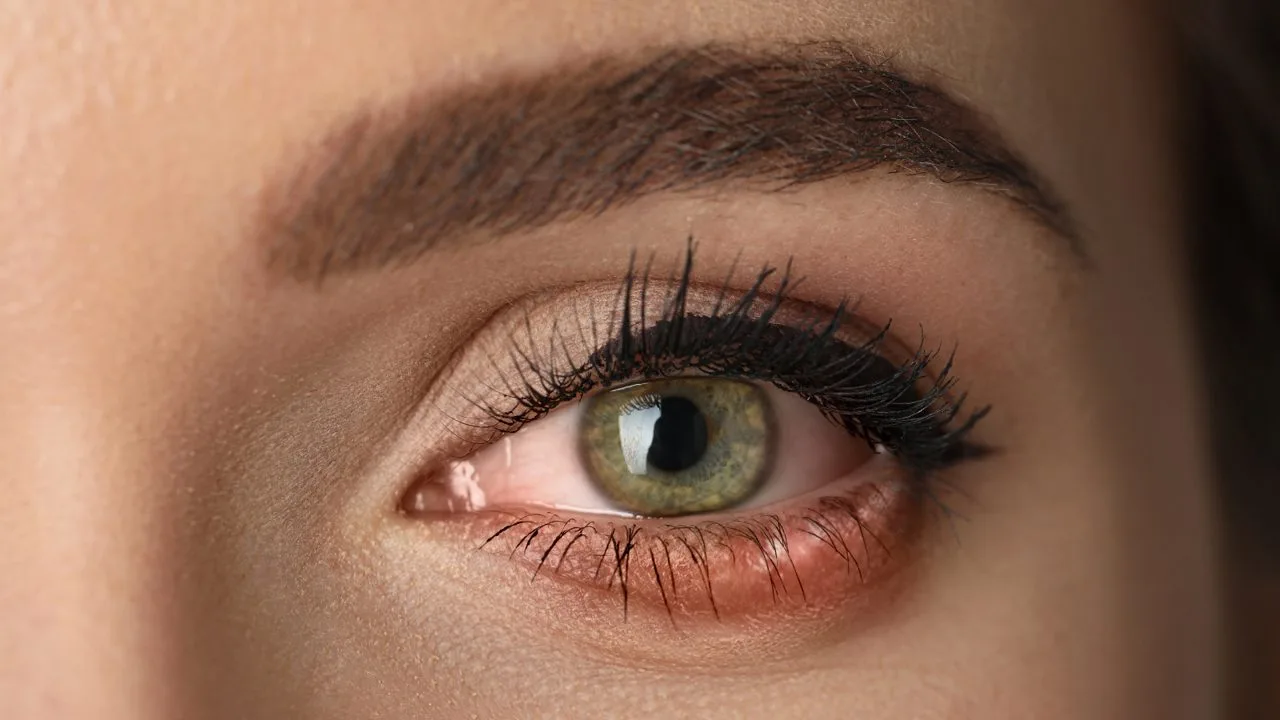
A red eye that itches, waters, or feels sticky on waking: conjunctivitis is very common and usually mild. The key is to distinguish between its forms and to know when a red eye should, on the contrary, prompt a prompt consultation.
In brief: conjunctivitis is an inflammation of the thin membrane covering the white of the eye and the inner surface of the eyelids. It may be viral, bacterial, or allergic. Most cases resolve well with simple treatment. However, a red eye that is painful, associated with reduced vision, or occurring in a contact lens wearer, requires prompt consultation.
The conjunctiva is the transparent membrane lining the white of the eye and the inner surface of the eyelids. When it becomes inflamed, the eye turns red, waters, and itches: this is conjunctivitis. It is one of the most common causes of a red eye, and in most cases remains superficial and benign.
Symptoms point towards the cause, though only an examination can confirm it:
| Form | Characteristic signs | Key feature |
|---|---|---|
| Viral | Red eye, clear watering, often both eyes, sometimes associated cold symptoms | The most common form, highly contagious, often resolves on its own |
| Bacterial | Thick discharge, eyelids stuck together on waking | May require local antibiotic treatment |
| Allergic | Marked itching, both eyes, often seasonal | Not contagious, linked to allergens (pollen, etc.) |
Viral and, to a lesser degree, bacterial conjunctivitis can be transmitted. A few measures help limit contagion:
For most cases of conjunctivitis, simple care is sufficient to get through the episode: saline washes, clean hands and eyelids, rest for the eyes. Allergic conjunctivitis is relieved by avoiding the allergen and using appropriate treatment. Antibiotics are not always necessary: many cases of conjunctivitis, particularly viral, resolve without them. Prolonged self-medication is not advisable.
A red eye is not always a simple case of conjunctivitis. Seek prompt advice in the event of: significant pain, reduced vision, marked light sensitivity, a very red eye around the cornea, contact lens wear, or in a newborn.
These signs may indicate a deeper problem (cornea, inside of the eye) that requires examination. If in doubt, it is better to seek advice. Dr Gattoussi sees patients in Paris 11th.
The viral and bacterial forms can be, particularly the viral form. Hygiene measures help limit transmission. The allergic form is not contagious.
Not always. Many cases of conjunctivitis resolve on their own. Antibiotics are only useful in certain bacterial forms.
Often a few days to one or two weeks depending on the form. A prolonged or worsening course should prompt a consultation.
Remove your lenses and consult if the eye is red and causing discomfort: in a contact lens wearer, a painful red eye should be seen promptly.
This article is for general information purposes and does not replace a consultation. It does not constitute individual medical advice.
Further reading