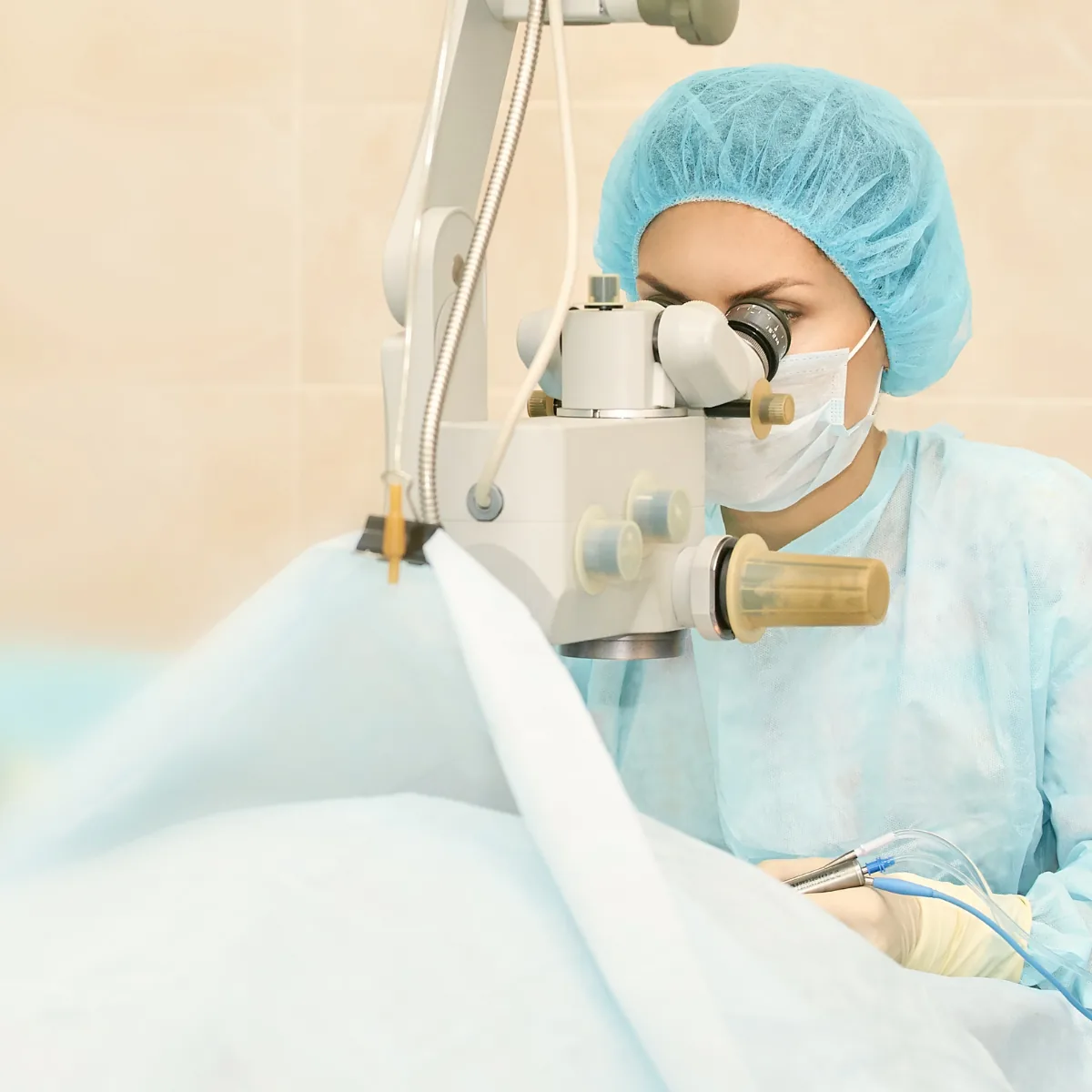
Lasik is one of the reference techniques in laser refractive surgery. PresbyLasik is a variant that also targets near vision. The choice of technique is always made after a full pre-operative assessment, based on your individual eye profile.
Lasik (laser in situ keratomileusis) is a refractive surgery technique that corrects visual defects by reshaping the cornea, the transparent surface at the front of the eye, comparable to a camera lens. The procedure takes place in two stages: a very thin corneal flap is first created on the surface, then lifted; the laser then sculpts the tissue beneath to change the curvature of the eye, before the flap is repositioned without sutures.
By slightly modifying the curvature of the cornea, the laser shifts the point where light rays converge so that it forms on the retina again. This is what allows correction of myopia, hyperopia, and astigmatism, when the eye's conditions permit.
Lasik acts on the cornea, at the front of the eye. It corrects the existing optical defect, but does not protect the eye from its natural ageing or from routine ophthalmological follow-up.
Schematic, non-anatomical illustration of the three stages of Lasik. The actual procedure is explained during the consultation.
Correcting presbyopia with the laser: PresbyLasik and Monovision
Presbyopia is the difficulty with near vision that develops progressively with age, generally from around the age of forty. Two laser approaches can help restore independence: PresbyLasik and monovision. Both are laser techniques that reshape the cornea.
PresbyLasik. Rather than targeting a single distance, the laser shapes the cornea to distribute vision across multiple distances, both near and far.
Monovision. The laser corrects one eye more for distance vision and the other more for near vision; the brain then favours the eye best suited to each distance.
Both approaches require a period of visual adaptation and are not suitable for all profiles. They are considered on a case-by-case basis, after the assessment, taking into account your lifestyle and near-vision expectations.
Which technique for which need?
These techniques are based on the same fundamental procedure, laser reshaping of the cornea following flap creation. What distinguishes them is the visual objective being pursued.
Standard Lasik
It aims to correct a distance vision defect: myopia, hyperopia, astigmatism. The cornea is reshaped so that distance vision is clear, without correction. Presbyopia, if present or developing subsequently, will still require correction for near vision.
PresbyLasik
It additionally aims to restore independence for near vision, by distributing vision across multiple distances. This multifocal correction requires an adaptation period and is subject to detailed information about its expected benefits and limitations.
Monovision
The laser corrects one eye more for distance vision and the other more for near vision. The brain learns to favour the eye best suited to each distance. This approach also requires a period of adaptation and is not suitable for all profiles.
No technique is objectively "the best": the right technique is the one that matches your eye and your needs, determined by the pre-operative assessment.
Who is it for?
The indication can only be established after a complete assessment. Several conditions are generally required:
a visual defect that has been stable for at least one year;
a cornea with sufficient thickness and shape to allow flap creation;
absence of certain eye conditions (severe dry eye, corneal abnormality, uncontrolled retinal disease);
being an adult;
an ongoing pregnancy is a temporary contraindication.
When Lasik is not appropriate, PRK may be considered. The assessment guides you towards the safest option for your eye.
How does the procedure work?
The procedure is performed on a day-case basis, under local anaesthesia with eye drops, and takes a few minutes per eye. It is generally painless; a simple sensation of pressure may be felt during the procedure.
1
Positioning and anaesthesia
You are positioned lying down. Anaesthesia is administered via eye drops, without an injection.
2
Corneal flap creation
A very thin flap is created on the surface of the cornea, then gently lifted.
3
Laser reshaping
The laser sculpts the cornea according to the correction calculated for your eye. This step takes only a few tens of seconds per eye.
4
Flap repositioning
The flap is repositioned on the cornea, where it adheres naturally without sutures.
What recovery can I expect?
Visual recovery after Lasik is generally rapid. Fluctuating vision, a sensation of grittiness, watering, or light sensitivity may be experienced in the first hours and days. Eye drops are prescribed to support healing.
eye drops prescribed for healing and comfort;
visual rest and eye protection for the first few days;
avoid rubbing the eyes while the flap heals;
return to activities in line with instructions given at the consultation;
scheduled follow-up checks.
Key points to know
No technique is objectively "the best": the right technique is the one that matches your eye, determined by the pre-operative assessment. Lasik has its advantages, such as rapid recovery, and its limitations, which depend in particular on the thickness and shape of your cornea. All of these elements are explained during the consultation, with no obligation.
How does the care pathway work with Dr Gattoussi?
The approach is progressive and without obligation: refractive assessment and corneal imaging, information and shared decision, procedure if the indication is confirmed, then post-operative follow-up. This evaluation draws on Dr Gattoussi's expertise in ocular imaging, which allows a particularly precise pre-operative analysis of the cornea.
Frequently asked questions
Is Lasik painful?
The procedure is performed under local anaesthesia with eye drops and is not painful. A sensation of pressure may be felt during the procedure, followed by transient discomfort in the hours that follow.
What is the difference between Lasik and PresbyLasik?
Lasik primarily corrects distance vision (myopia, hyperopia, astigmatism). PresbyLasik is a variant that additionally aims to correct presbyopia, and therefore near vision. The choice depends on your eye and your needs.
Is the correction permanent?
The laser durably corrects the existing defect, but the eye continues to age: presbyopia, linked to age, may appear or progress afterwards.
When can I return to work and sport?
Return depends on your activity. Precise instructions, including for screens and sport, are provided after the procedure.
Is Lasik covered by health insurance?
Refractive surgery is generally not covered by the French national health insurance. Some complementary health plans offer a fixed allowance. The details are clarified during the consultation.