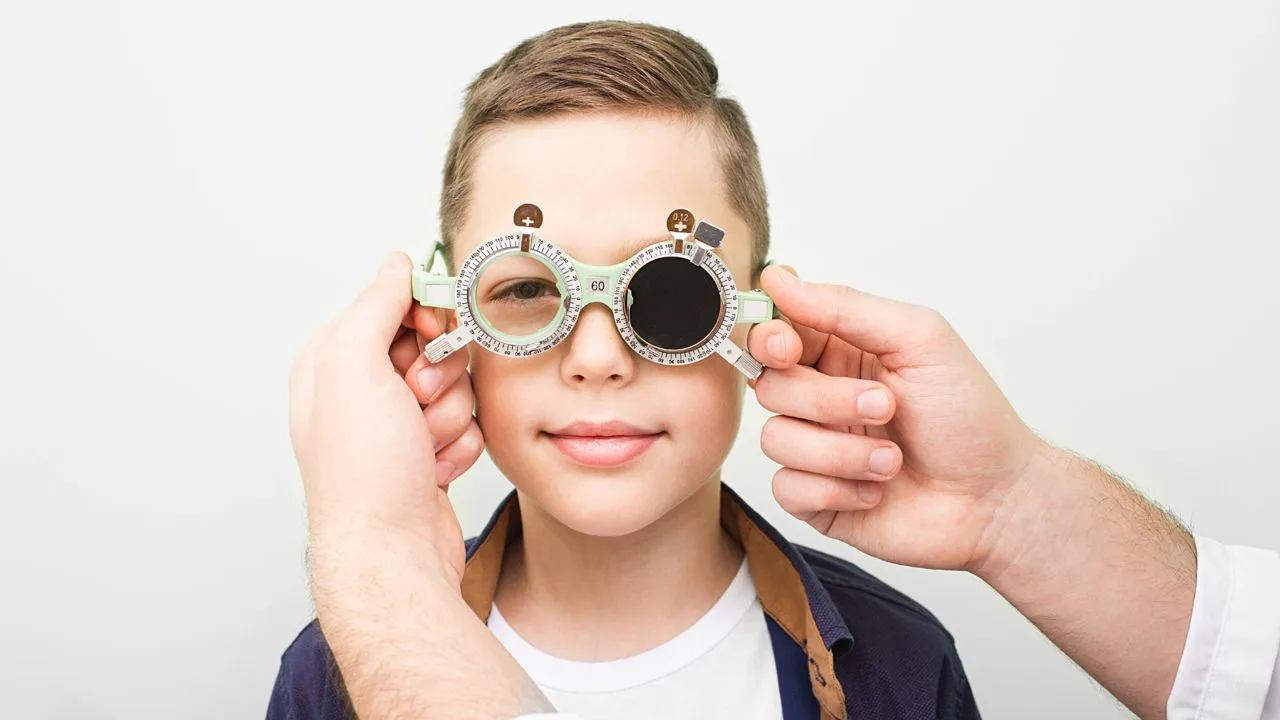
Vision develops during the first years of life. An undetected problem can hold back this development, often without the child complaining. That is why screening at the right moments matters so much.
In brief: a child does not know they are seeing poorly, because they have no point of comparison. Screening at key ages, and at the first sign of concern, allows a visual problem to be detected early and good visual development to be preserved.
During the first years, the brain learns to see using the images sent by the eyes. If one eye sees poorly (uncorrected refractive error, strabismus), the brain may "set it aside" and that eye may fail to develop properly: this is amblyopia, or lazy eye. Detected early, it responds well to treatment; detected late, it can leave lasting impairment. This is the whole point of early screening.
Beyond the routine checks carried out by the paediatrician or GP, an ophthalmic assessment is recommended at certain points:
Certain behaviours should prompt a consultation, at any age:
A white reflex in the pupil, in particular, requires prompt consultation.
The examination is painless and adapted to the child's age: the child does not need to be able to read. Vision in each eye is assessed using pictures or drawings, eye alignment is checked, and refraction is often measured after pupil dilation, which may blur vision for a few hours.
Screening looks primarily for:
Myopia often begins in childhood and may progress during the growing years. Beyond correction with glasses, attention is now given to slowing its progression, because high myopia increases the risk of retinal problems in adulthood. Time spent outdoors in daylight appears to play a protective role, whilst excessive near work is being studied as a contributing factor.
Several solutions have now demonstrated their effectiveness in limiting the progression of myopia in children:
Treatment is chosen on a case-by-case basis, according to the child's age, the degree of myopia and the speed at which it is progressing. Regular follow-up allows the management to be adjusted over time.
Dr Gattoussi, ophthalmologist in Paris 11th, can carry out a visual assessment for children and, where necessary, guide management appropriately.
From the first months if there are warning signs or a family history, then at key stages of early childhood, and before starting school even without any sign. The schedule is discussed at the consultation.
Yes, the examination is adapted to their age and uses pictures and methods specific to very young children.
They do not damage the eye as such, but excessive near work and insufficient time outdoors are studied in the context of myopia progression. Time spent outside appears to be protective.
Yes, because a child does not always know they are seeing poorly. An examination before starting school is useful even without any complaint.
This article is for general information purposes only and does not replace a consultation. It does not constitute individual medical advice.
Further reading